
pubic hair - asapscience
Taboo Topics Made Approachable
AsapSCIENCE is a YouTube channel created by Canadian YouTubers Mitchell Moffit and Gregory Brown. Founded in 2012 while the pair were biology students at the University of Guelph, the channel covers a wide range of science and technology topics in an engaging, accessible format. It has grown into one of the largest educational channels on YouTube, currently sitting at over 10.8 million subscribers with more than 2 billion total views.
Each ASAPScience video highlights a scientific concept conveyed using coloured drawings on a whiteboard and voice-over narration in a stop motion format. Collaborating with AsapSCIENCE on Should You Shave Your Pubes? gave us the opportunity to develop what can only be described as a “Franken-style”: a hybrid that fused AsapSCIENCE’s signature whiteboard aesthetic with Thought Café’s illustration approach. The result was something genuinely new, but familiar enough to feel cohesive to the AsapSCIENCE channel.
Thought Café + is a series in which we collaborate with interesting thinkers, speakers, influencers & organizations
It also reminded us why animation is such a powerful tool for exactly this kind of subject matter. Taboo topics, whether about bodies, sex, health, or biology, carry real social weight in live-action or plain-text formats. Animation naturally diffuses that. Humour, art, and movement work together to lower the emotional stakes, inviting curiosity rather than embarrassment. A drawn body is just easier to look at than a photographed one. An animated diagram asks questions rather than shutting them down.
This makes animation especially effective for health education across all ages. Whether you are ten years old and confused, or thirty years old and too proud to Google it, a well-crafted animated video meets you where you are, without making it weird.
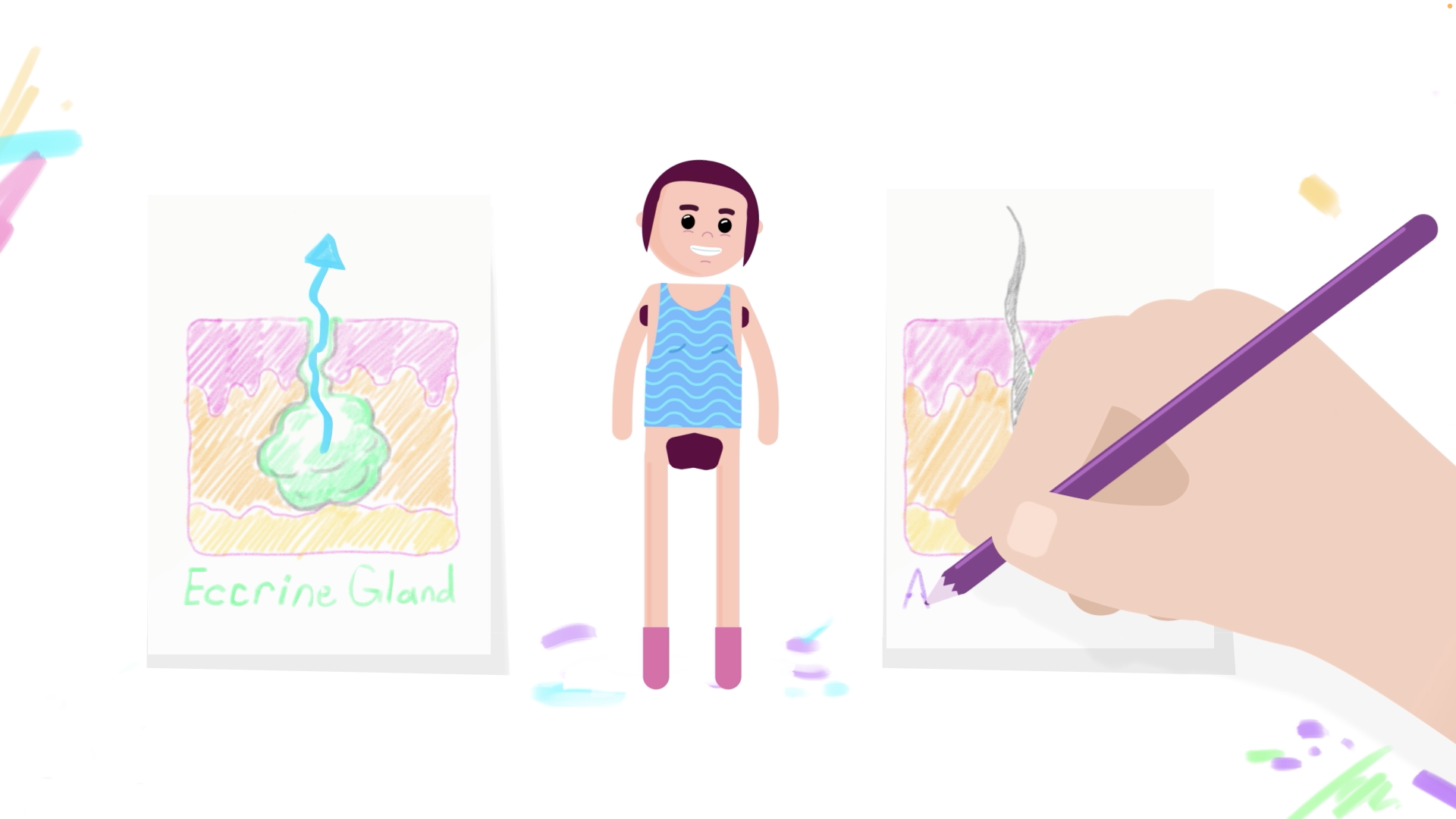
Our hybrid style consisted of Thought Café’s bespoke style blended with the whiteboard approach AsapSCIENCE used, only illustrated
Should You Shave Your Pubes? is a strong example of that principle in action. A topic that would feel clinical or uncomfortable in almost any other format becomes genuinely funny, informative, and watchable when you hand it to animators who know how to hold both the joke and the science at the same time. It closes a real information gap: cultural trends heavily promote personal grooming, yet most people have never been given the evolutionary or health context to make an informed choice.
Leave it to animation, and a little collaboration, to get right into it, in a lighthearted way.